My Magical Storybook: A Creative Tool for Kids and Beyond
My Magical Storybook is more than just a printable journal—it’s a gateway to imagination, creativity, and storytelling. Designed for children aged 5–10, this resource offers a unique blend of guided writing prompts and dedicated drawing spaces that encourage young minds to explore their creative potential. But its value extends beyond the target audience, offering practical benefits for educators, parents, and even professionals looking to foster creativity in a structured way.
A Creative Resource with Broad Applications
At its core, My Magical Storybook is a tool that supports early literacy, language development, and expressive thinking. The guided story writing pages provide prompts like “Once upon a time,” “The hero’s name was…”, and “The magical ending…” which help children structure their narratives while keeping the process fun and engaging. These prompts are not just for kids—they can also serve as a framework for anyone looking to develop their storytelling skills or brainstorm ideas for creative projects.
The inclusion of matching drawing spaces on every page adds another layer of value. Visual storytelling is an essential skill, and by combining writing with illustration, My Magical Storybook helps users build both verbal and visual communication abilities. This dual approach makes it ideal for use in classrooms, homeschooling environments, or even as part of a personal creative routine.
Integration into Workflows and Learning Processes
Whether you're a teacher, parent, or educator, My Magical Storybook can be seamlessly integrated into various workflows. For instance, during classroom storytelling time, it can act as a hands-on activity that complements traditional reading and writing exercises. Teachers can use it as a supplement to curriculum-based lessons, helping students engage with literature in a more interactive and personalized way.
For homeschoolers, My Magical Storybook offers a flexible tool that supports independent learning. It can be used as a standalone resource or paired with other educational materials to create a well-rounded learning experience. Its structured yet open-ended format encourages exploration without overwhelming the user, making it perfect for self-directed learners.
Professionals and creatives may also find value in using My Magical Storybook as a brainstorming tool. The guided prompts can help spark ideas for creative projects, marketing campaigns, or even business strategies. By encouraging a narrative-driven approach, it fosters innovation and problem-solving in unexpected ways.
Collaboration and Compatibility with Other Tools
My Magical Storybook is designed to work alongside other creative tools and resources. Its printable format makes it compatible with a wide range of digital and physical platforms. Users can print the journal directly from their computers or tablets, or they can integrate it with digital drawing apps and writing software for a hybrid creative experience.
For those who prefer digital workflows, the printable nature of My Magical Storybook allows for easy customization. Parents and educators can modify the content to suit specific learning goals or project requirements. This adaptability ensures that the journal remains a versatile tool across different settings and user needs.
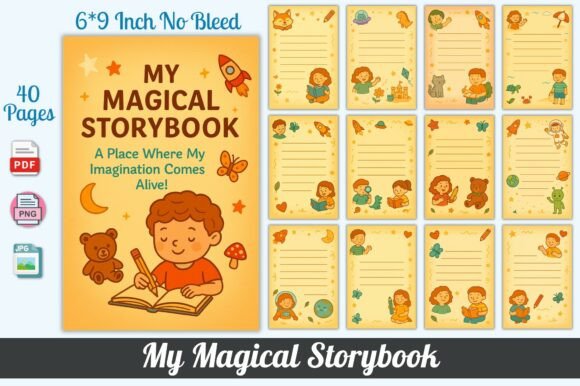
Additionally, the journal’s whimsical design—complete with magical borders and kid-friendly fonts—creates an inviting atmosphere that encourages consistent use. This aesthetic appeal can be particularly valuable in environments where motivation and engagement are key, such as in schools or creative studios.
Practical Implementation Tips and Workflow Examples
When implementing My Magical Storybook, it’s important to consider how it fits into existing routines. For example, parents might incorporate it into a weekly creative time with their children, using it as a way to bond and explore storytelling together. Educators could use it as a supplement to lesson plans, allowing students to apply what they’ve learned in a more hands-on setting.
One effective workflow involves using the journal as a pre-writing exercise. Before diving into a larger writing project, users can start with the guided prompts to generate ideas and structure their thoughts. This approach helps reduce the pressure of starting from scratch and makes the creative process feel more manageable.
Another useful application is using My Magical Storybook as a reflective tool after completing a project. By encouraging users to write about their experiences and outcomes, it promotes critical thinking and self-assessment. This can be especially beneficial in educational or professional settings where reflection is a key component of growth.
Organizing and Maintaining Creativity
To maximize the effectiveness of My Magical Storybook, it’s helpful to establish a consistent routine. Setting aside a specific time each week for creative activities can help users stay engaged and motivated. This consistency also makes it easier to track progress and celebrate milestones, which is crucial for long-term creativity and productivity.
Organization plays a key role in maintaining the journal’s usefulness. Keeping the pages in order and labeling completed stories can make it easier to revisit past work and build upon previous ideas. For those who use the journal digitally, organizing files by date or theme can enhance accessibility and streamline the creative process.
It’s also worth considering how My Magical Storybook fits into broader creative practices. Whether used as a standalone resource or part of a larger toolkit, its structured yet flexible format allows for seamless integration into both personal and professional workflows.
Long-Term Use and Continuous Growth
One of the greatest strengths of My Magical Storybook is its ability to support long-term creativity and growth. Unlike many one-time-use resources, this journal encourages ongoing exploration and development. As users become more comfortable with the format, they can begin experimenting with more complex narratives and artistic techniques.
For educators and parents, the journal’s adaptability means it can grow with the child. As they mature, the guided prompts can be adjusted or replaced with more advanced challenges, ensuring that the journal remains relevant and engaging throughout different stages of development.
Professionally, the journal can serve as a foundation for developing more sophisticated creative processes. The skills learned through storytelling—such as narrative structure, character development, and visual storytelling—can be applied to a wide range of creative fields, from writing and graphic design to marketing and product development.
Conclusion
My Magical Storybook is more than just a printable journal—it’s a powerful tool for fostering creativity, literacy, and imagination. Whether used in classrooms, homes, or creative workflows, it offers a structured yet flexible approach to storytelling that supports both children and adults alike. By integrating it into daily routines and creative processes, users can unlock new levels of expression and innovation.