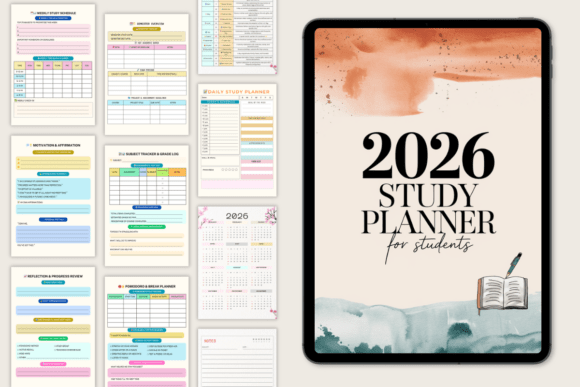
Master Your Academic Journey with the 2026 Study Planner for Students
The 2026 Study Planner for Students is a meticulously designed tool aimed at helping learners of all levels—from middle school to college—stay organized, focused, and on track throughout the academic year. With its comprehensive structure and thoughtful layout, this planner goes beyond traditional calendars and to-do lists, offering a holistic approach to managing study time, assignments, exams, and personal goals. Whether you're preparing for major projects, balancing multiple courses, or simply looking to improve your productivity, the 2026 Study Planner provides the framework needed to succeed.
A Structured Approach to Academic Success
At its core, the 2026 Study Planner is built on the principle that effective planning leads to better outcomes. It features a 2026 Year-at-a-Glance Calendar that allows users to visualize the entire academic year at a glance. This section includes key dates such as holidays, school breaks, and important events, making it easier to plan ahead and avoid last-minute stress. The calendar is not just a visual aid; it's a strategic tool that helps students align their study schedules with external factors that might impact their progress.
Complementing the year-at-a-glance view are Semester Planning Pages that break down the academic year into manageable segments. These pages include start and end dates for each semester, key milestones, and course overviews. By having this information readily available, students can set realistic expectations and allocate their time more effectively. For instance, a high school student might use these pages to map out how much time they need to dedicate to each subject during the first semester, ensuring they don't fall behind in any area.
Tracking Progress and Performance
One of the standout features of the 2026 Study Planner is its Subject Tracker Grade Logs. This section enables students to monitor their performance across different subjects, identify areas where they struggle, and estimate their GPA throughout the year. By regularly updating these logs, learners can gain insights into their strengths and weaknesses, allowing them to adjust their study strategies accordingly. For example, a college student who notices a consistent drop in math scores might decide to allocate more time to practice problems or seek additional tutoring resources.
The Goal Setting Worksheets further enhance the planner’s value by encouraging students to define clear, achievable objectives. These worksheets guide users through breaking down large goals into smaller, actionable steps, which can be motivating and less overwhelming. A practical example might be setting a goal to complete a research paper by a specific date, then dividing that task into steps like choosing a topic, conducting preliminary research, outlining the paper, and drafting sections.
Staying On Top of Deadlines
Managing deadlines is a common challenge for students, and the 2026 Study Planner addresses this with its Assignment Exam Calendar. This feature allows users to input due dates for assignments, exams, and other academic tasks, along with study steps and prep materials by subject. By keeping track of these deadlines in one place, students can avoid the chaos of missed submissions and last-minute cramming. For instance, a high school student working on a science project can use this calendar to schedule regular review sessions and ensure they have enough time to complete each phase of the project.
The Pomodoro Break Tracker is another innovative addition that supports focus and productivity. This section helps students implement the Pomodoro Technique—a method of working in focused intervals followed by short breaks. By incorporating this timer-based approach, users can maintain concentration while also preventing burnout. A typical usage scenario might involve a college student using the Pomodoro Break Tracker to study for an hour, take a 15-minute break, and then return to their work with renewed energy.
Organizing Daily and Weekly Routines
The Daily Study Planner Pages offer a structured way to manage daily priorities, to-do lists, appointments, and progress tracking. Each day is divided into sections that allow students to prioritize tasks, set reminders, and reflect on their achievements. This level of detail ensures that even the busiest students can stay on top of their responsibilities without feeling overwhelmed.
In addition to daily planning, the Weekly Study Schedule helps users block time for each subject based on their learning needs and preferences. This flexibility is particularly useful for students who may need to dedicate more time to certain subjects or who prefer to study in blocks rather than spread out their efforts. For example, a student preparing for final exams might choose to study math on Mondays and Wednesdays, leaving Thursdays and Fridays for other subjects.
Motivation and Mindset
Recognizing the importance of mindset in academic success, the 2026 Study Planner includes Motivation Affirmation Pages. These pages provide positive affirmations and reflective prompts that help students maintain a positive outlook and stay motivated throughout the year. By incorporating these elements into their routine, learners can build resilience and a growth mindset, which are essential for long-term success.
The planner also encourages self-reflection through its design, prompting users to think about their progress, challenges, and future goals. This reflective approach fosters a deeper understanding of one’s learning journey and helps students make informed decisions about their academic path.
Who Benefits Most from the 2026 Study Planner?
The 2026 Study Planner is ideal for students who are looking to improve their organizational skills, manage their time more effectively, and achieve their academic goals. It is particularly beneficial for those who struggle with procrastination, forgetfulness, or lack of direction. Middle school students can use it to develop good study habits early on, while high school and college students can leverage its advanced features to handle more complex academic demands.
Additionally, the planner is well-suited for individuals who are preparing for standardized tests, managing multiple courses, or working on long-term projects. Its adaptability makes it a valuable resource for anyone who wants to take control of their academic life and maximize their potential.
Practical Recommendations and Limitations
While the 2026 Study Planner offers numerous benefits, it is important to consider its limitations. The planner requires active participation and commitment from the user. Simply having the tool is not enough; students must consistently update their plans and reflect on their progress. Those who are not disciplined or do not engage with the planner regularly may not see the full range of benefits it offers.
Another consideration is the planner’s physical format. While it is designed for use with pen and paper, some users may prefer digital alternatives. However, the tactile experience of writing in a planner can enhance memory retention and engagement, making it a compelling choice for many learners.
Ultimately, the 2026 Study Planner for Students is a well-rounded tool that combines structure, flexibility, and motivation to support academic success. Whether you're a student aiming to improve your grades or someone seeking to develop better study habits, this planner can be a valuable addition to your toolkit. By embracing its features and committing to its use, you can take meaningful steps toward achieving your academic goals.