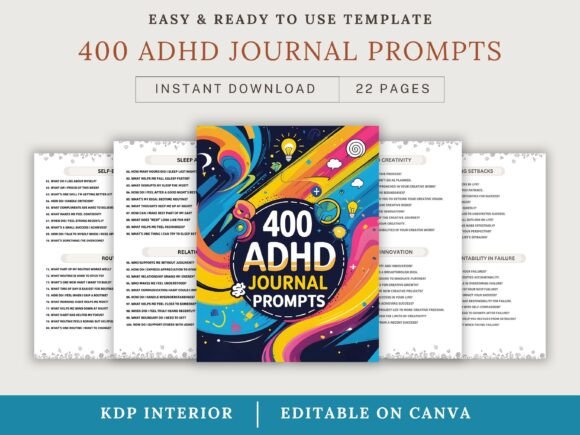
400 ADHD Journal Prompts: A Tool for Growth and Clarity
For individuals navigating the unique challenges of ADHD, finding tools that support focus, emotional regulation, and self-awareness can be transformative. 400 ADHD Journal Prompts is a comprehensive resource designed to help users build these essential skills through consistent reflection. Whether you're an adult looking to manage daily tasks, a student aiming to improve academic performance, or a creative professional seeking to harness your natural strengths, this collection offers something valuable for everyone.
What Are 400 ADHD Journal Prompts?
400 ADHD Journal Prompts is a curated set of writing exercises tailored specifically for people with ADHD. Each prompt encourages deep thinking about personal experiences, emotions, and behaviors. The prompts are structured to guide users in exploring their thought patterns, identifying triggers, and developing strategies to manage common ADHD-related challenges like distraction, impulsivity, and time management.
The journaling process is not just about writing—it's about reflection, self-discovery, and gradual change. By engaging with these prompts regularly, users can create a more organized mental space, track progress over time, and cultivate habits that support long-term well-being.
Where and When to Use 400 ADHD Journal Prompts
One of the best things about 400 ADHD Journal Prompts is its flexibility. You can use it at home, in the office, or even on the go. It’s ideal for moments when you need to pause and reflect—whether after a busy day, during a break, or before starting a new task.
Many users find it helpful to journal first thing in the morning to set intentions for the day, or right before bed to review what went well and what could be improved. Some prefer to journal during transitions between activities, such as moving from work to a hobby or from one task to another. These moments often offer insight into how ADHD symptoms impact behavior and decision-making.
Why Use 400 ADHD Journal Prompts?
ADHD can make it difficult to stay focused, manage time effectively, and regulate emotions. 400 ADHD Journal Prompts addresses these challenges by encouraging users to explore their thoughts in a structured way. Over time, this practice helps build awareness of patterns, which is key to managing symptoms and improving self-regulation.
For example, a prompt might ask, “What distracted me today, and how did I respond?” This simple question can lead to deeper insights about what triggers impulsive behavior and how to redirect attention. Another prompt might ask, “What did I accomplish today that made me proud?” This helps reinforce positive behaviors and boosts self-esteem.
Real-World Use Cases
400 ADHD Journal Prompts is versatile enough to fit into various aspects of life. Here are some realistic scenarios where it can be beneficial:
- Students: Journaling can help with organization, goal setting, and managing schoolwork. For instance, a prompt like “What study techniques work best for me?” can lead to more effective learning strategies.
- Professionals: Freelancers and entrepreneurs can use journaling to track productivity, identify time-wasters, and plan better work routines. A prompt like “What distractions do I face while working?” can help create a more focused workspace.
- Parents: Journaling can help manage stress and improve communication with children. A prompt like “How did I handle my child’s tantrum today?” can lead to more thoughtful responses in the future.
- Creative Individuals: Artists, writers, and musicians can use prompts to explore ideas, overcome blocks, and stay inspired. A prompt like “What creative idea am I holding back from pursuing?” can spark new projects.
- Individuals Seeking Self-Awareness: Journaling helps uncover hidden patterns and emotions. A prompt like “What emotions have I been avoiding lately?” can lead to greater emotional clarity and self-compassion.
Benefits Across Different Areas of Life
400 ADHD Journal Prompts supports growth in multiple areas, including:
- Focus and Attention: Prompts that encourage tracking attention span and identifying distractions help build concentration skills.
- Emotional Regulation: Writing about feelings and reactions teaches users to manage emotions more effectively.
- Organization and Productivity: Prompts that ask about daily routines and task management help create structure and efficiency.
- Self-Care and Self-Acceptance: Reflective prompts help users embrace their strengths and prioritize self-care.
- Relationships: Prompts that explore communication styles and conflict resolution can improve interpersonal connections.
- Mindfulness and Creativity: Prompts that encourage present-moment awareness and idea generation foster creativity and mental clarity.
Considerations Before Using 400 ADHD Journal Prompts
Before diving into 400 ADHD Journal Prompts, consider your goals and how you want to use the journal. Are you looking to manage symptoms, improve productivity, or enhance self-awareness? Understanding your purpose will help you choose the right prompts and maintain consistency.
It’s also important to be patient with yourself. Like any habit, journaling takes time to become a regular part of your routine. Start small—write for just five minutes a day—and gradually increase the time as you feel more comfortable.
Additionally, consider using the journal alongside other ADHD management strategies, such as therapy, medication, or time-management tools. 400 ADHD Journal Prompts works best when used as part of a holistic approach to well-being.
Conclusion
400 ADHD Journal Prompts is more than just a collection of writing exercises—it’s a powerful tool for personal growth and self-improvement. By consistently reflecting on thoughts, emotions, and behaviors, users can develop greater awareness, build better habits, and create a more balanced and fulfilling life. Whether you’re an adult, student, or creative professional, this resource offers practical support for managing ADHD in a way that feels meaningful and sustainable.